Monthly Website Subscription vs. Outright Ownership: Which One Wins?
- A monthly website subscription looks cheap upfront, but over one to three years it usually costs more than buying outright — and you still don't own the site.
- The biggest risk of a subscription is that your site, its saved links, and its Google ranking can all disappear the moment you stop paying.
- Real ownership means the domain is in your name and the source code is handed over to you.
- Subscriptions only make sense for short-term or experimental needs; small businesses planning long-term should buy outright.
- When buying outright, confirm you receive the source code, domain admin access, hosting details, renewal instructions, and a written handover document.
Torn between a monthly website subscription and a one-time purchase you own outright? The real question isn't which price tag is lower today — it's what you have in your hands after one, two, or three years.
Drag-and-drop platforms advertising $8 to $36 a month sound easy on the wallet. But miss a renewal or decide to stop paying, and the page your regulars use to make a booking, check prices, or place an order could go dark overnight.
Two ways to get a website: monthly subscription or one-time purchase
There are two common routes for a pho shop, a clothing boutique, or a small spa to get a website. Both have their fans, but what you pay and what you walk away with are very different.
- Monthly website subscription: you sign up for a drag-and-drop platform, snap pre-built blocks together into a page, and pay a regular fee each month (typically $8 to $36 depending on the plan). Stop paying, and the site stops running.
- One-time purchase: you pay a single upfront amount and receive a complete website along with the source code and a domain registered in your name. No more subscription fees after that — just a few small recurring costs like domain and hosting renewals.
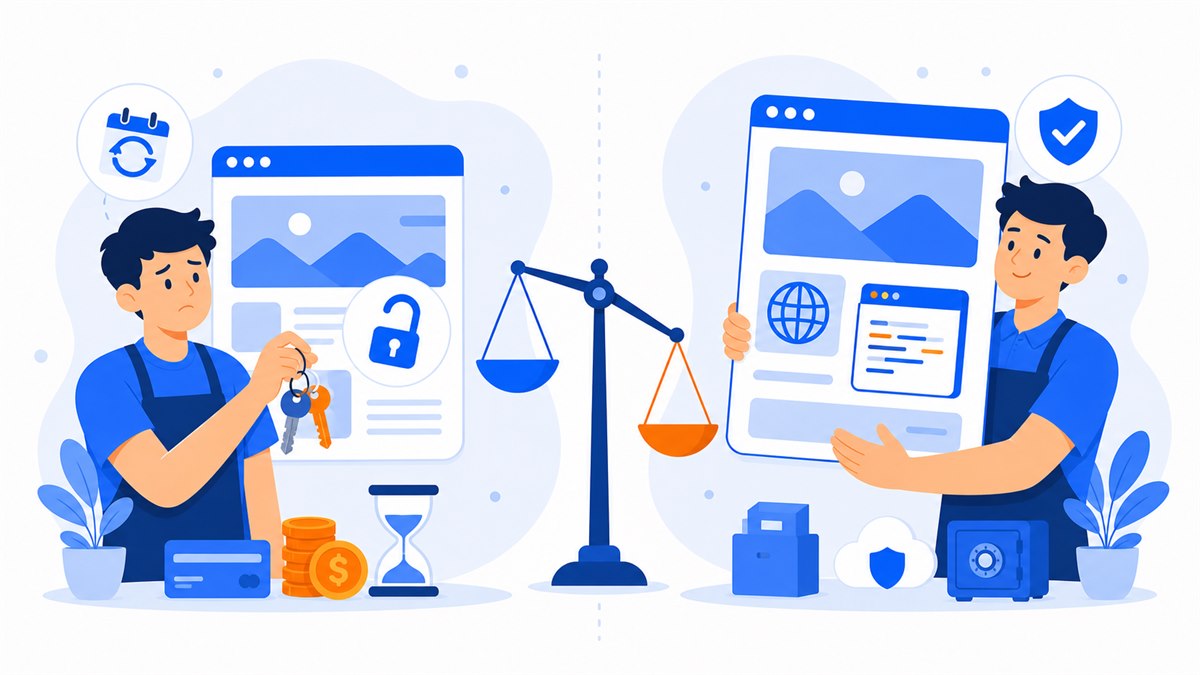
Think of it this way: a subscription is like renting a shopfront — you pay every month and the landlord keeps the keys. Buying outright is like purchasing the stall itself — more expensive upfront, but from that point on it's yours.
What do the long-term costs actually look like over 1-3 years?
This is where many shop owners get the math wrong. A $12-a-month fee looks light, but the yearly total tells a different story.
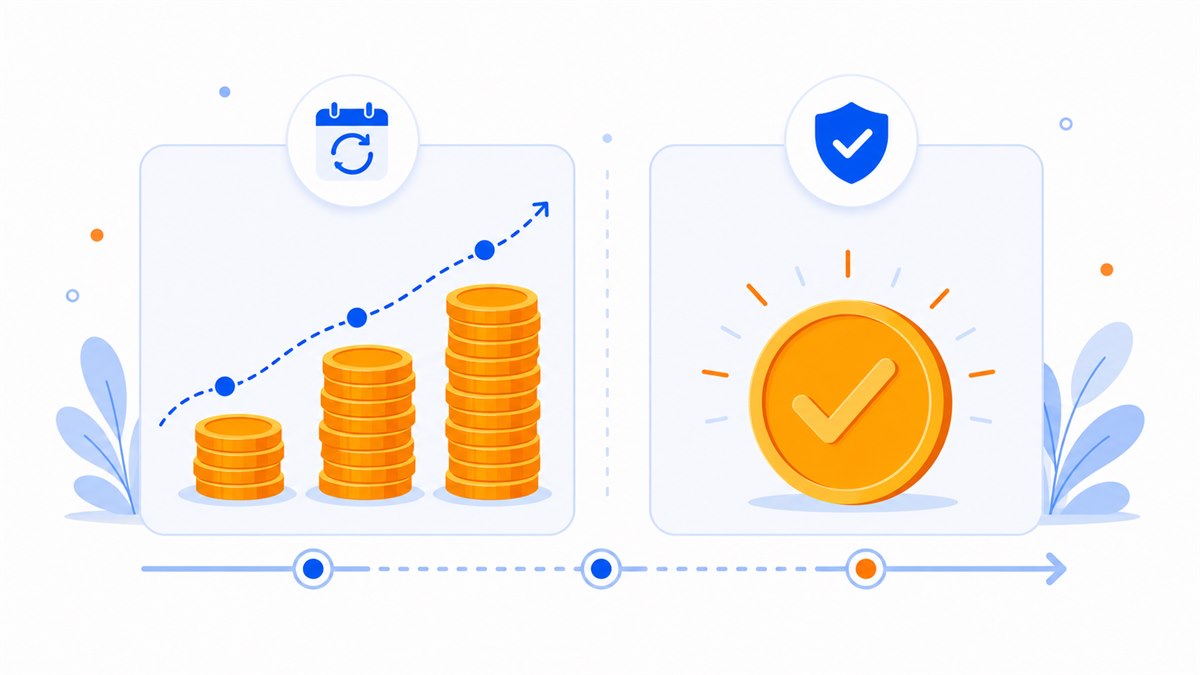
Take a small spa on a mid-range plan at around $16 a month. That's roughly $192 a year. Over three years it climbs to nearly $580 — and when those three years are up, the site still isn't yours. Stop paying and you lose access. Choosing a one-time payment with source-code handover means you control the asset and can plan total costs with much more clarity.
To see exactly where the money goes, read How Much Does a Website Cost? A Realistic Pricing Breakdown — it breaks down what a well-made website is actually made of, so you stop paying monthly for something a single payment could cover.
The risk of losing your site when you stop paying
This is the biggest risk most people overlook when they sign up. With a subscription model, your website lives inside your account on that platform. The day you forget to renew, change your mind, or can't keep up when the platform raises its prices — the site goes down.
The damage isn't just a few missing photos. You lose the link customers have saved, the Google search ranking you built over a year, and any orders currently in progress. A clothing shop running ads that point to a subscription page effectively throws its entire ad budget away the moment it stops paying — customers click through and find nothing.
A rented website is never truly yours. You're paying for temporary access, and the moment payments stop, so does your site.
Owning your site is a different story. The site lives on hosting registered in your name, and the source code is in your hands. Even if the agency that built it closes down, your site keeps running and you can move it to a new host whenever you like.
Source code and domain ownership: who really holds the keys?
Two things determine whether you actually own your website: the source code and the domain. Before you hand over any money, ask the web builder these two questions.
- Is the domain (for example, yourshopname.com) registered in your name? If it's registered to the agency instead, they hold your brand name and can keep it if you ever part ways.
- Will the source code be handed over to you? If not, you're locked into a single provider — every change and every migration has to go through them.
Most subscription platforms never give you the source code, and a subdomain like your-shop.their-platform.com definitely isn't yours. To understand how domains and hosting work and why both should be in your name, see What Is a Domain and Hosting? A Beginner's Guide to Choosing.
When does a monthly subscription actually make sense?
To be fair, a subscription isn't always the wrong call. There are a few situations where it fits:
- You need a page for a very short window — say, a landing page for a two-week promotion that you'll take down afterward.
- You want to try things out, aren't serious about selling online yet, and are fine walking away at any point.
- You need to swap layouts constantly and don't mind doing all of it yourself inside the platform.
Even when you only need something temporary, think twice if you're planning to run paid ads pointing to it. A landing page that belongs to you is still the safer bet. If you're not sure how a landing page differs from a regular website, Landing Page vs. Website: What's the Difference and When to Use Each will clear that up.
Why a one-time purchase usually wins for small businesses
For a restaurant, a hair salon, or a shop planning to operate long-term, buying outright is almost always the smarter financial decision. The reasons are straightforward:
- Pay once, use for years: no monthly drain on your budget, no price hikes to worry about.
- The asset is yours: source code and domain belong to you — you can move hosts or change developers on your own terms.
- Your Google ranking and reputation stay intact: the site doesn't go dark unexpectedly, so the SEO work and positive reviews you've accumulated keep building.
- Peace of mind: focus on running the business instead of watching renewal dates.
When you go the ownership route, make sure you receive all four things: source code, domain admin access, hosting details, and a written handover document. The site should also come with SSL/https, mobile optimization, a tap-to-call button, Zalo, Messenger, Facebook integration, and a contact form so it's ready to use from day one.
After receiving the site, test it yourself: open it on your phone, submit a test form, tap the call button, and ask the builder how to renew the domain and hosting from year two onward. These steps confirm you actually own and can operate the site — rather than just holding a URL.
A subscription costs you money every month and leaves nothing behind. Buy outright and you pay once — then the site is yours to run the business with.
Frequently asked questions
What does a monthly website subscription usually cost?
Drag-and-drop platforms typically charge around $8 to $36 a month depending on the plan. That sounds affordable, but over three years it can add up to several hundred dollars while the site still isn't yours. Multiply the monthly fee by 36 and compare it to the price of buying outright to see which option saves more.
Does my website disappear if I stop paying the subscription?
Yes. With a subscription model, the day you stop paying is the day the site goes offline. You lose the link customers have saved, your Google ranking, and any orders in progress. This is the biggest risk of renting over owning.
If I buy a website outright, are there any ongoing fees?
No monthly subscription fees. You only need to cover basic maintenance costs: domain renewal (roughly $12 to $32 a year) and hosting (around $40 a year). If the first year is included in your package, ask upfront where to renew from year two and whose name the accounts are in.
How do I know if I truly own my website?
Ask two questions: is the domain registered in your name, and will the source code be handed over to you? Both need to be a clear yes before you can call it real ownership. Get the answer in writing as part of the delivery handover.
Need a professional website or landing page?
Web Trong Ngày delivers in 24 hours, all-in for $40 — preview the demo first, pay only when you are happy, own it for life.