
Is AI-Written Website Content Good for SEO?

- AI does not automatically improve SEO; the final content quality matters most.
- Use AI for outlines, drafts, FAQs, headlines and internal-link ideas, but check everything against real business data.
- Do not let AI invent reviews, numbers, guarantees or business policies.
- Blog content can drive useful traffic when each post answers a specific search question and points readers toward the landing page.
- Optimization for AI search still starts with SEO fundamentals: useful content, clear structure, fast pages and crawlable links.
AI has made website content production much faster. A shop owner can ask AI for headlines, product descriptions, FAQs, blog posts and call-to-action ideas in minutes. The real question is whether that content helps SEO, or whether it makes the site sound like hundreds of other pages.
The answer depends on how AI is used. AI works well when it has real business information to work with: what the product is, what customers ask, how pricing works, which area the business serves, and what makes the offer different. If you ask AI for a generic article and publish it as-is, the page may read smoothly but add little value, which makes it harder to keep readers and harder to build strong signals for Google.
Google Search Central recommends focusing on helpful, reliable content written for people first. For AI-generated content, Google still emphasizes accuracy, quality and relevance, and warns against producing many pages without adding value. The safest approach is to use AI as an editorial assistant, not as the final decision-maker.
Does Google penalize AI-written website content?
It is too simple to say that AI content is automatically penalized. The issue is not the tool; it is the quality of the final page. A page supported by AI can still be useful if it includes real information, real examples, real experience and careful editing. A page written by a person can still be weak if it is copied, stuffed with keywords, or fails to answer the customer's question.
In its guidance on using generative AI content, Google notes that AI can help with researching a topic and adding structure to original content. But generating many pages with AI without adding value for users may violate spam policies. The practical takeaway: each page should help the reader solve a specific problem.
- Use AI to speed up research, outlines and drafts.
- Do not publish lots of similar pages just to cover keywords.
- Do not let AI invent numbers, guarantees, customer reviews or legal details.
- Read the page like a real customer: does this help someone decide faster?
Where AI helps most with website and landing page content
AI is best for speed and structure. For example, a spa building a service page can give AI its service list, prices, service area, main customer group and common questions. AI can then suggest the page outline, H2 headings, FAQs, meta description and a few CTA variations.
AI is especially useful for getting past the blank page. Many shop owners understand their product very well, but freeze when they need to turn that knowledge into a website. AI can turn scattered information into a structured draft. The business owner can then correct the voice, pricing, offers and details.
Tasks worth giving to AI
- Suggest outlines for a service page, about page, blog post or landing page.
- List questions customers may search for on Google.
- Write variations of headlines, meta descriptions, CTAs and opening lines.
- Shorten long paragraphs so they are easier to read on mobile.
- Turn product data into a structured description.
- Suggest internal links to related content on the same website.
If you are writing a sales page, the guide on writing landing page copy explains how to turn features into customer benefits. AI can produce the first draft quickly, but the benefits must match what customers actually care about.
What AI should not decide on its own
AI often writes with confidence, even when the information may be wrong. That is the biggest risk when using AI for business websites. A wrong line about pricing, warranty, delivery time or payment policy can damage trust quickly. An exaggerated promise can also create problems when customers compare it with reality.
Business-specific sections must be checked against source information: prices, address, opening hours, real images, real reviews, domain, hosting, warranty, handover process. AI cannot know which details are currently true for your shop or service.
- Do not let AI create customer reviews, customer names or project numbers.
- Do not let AI write guarantees such as "rank #1 on Google" if advanced SEO is not included.
- Do not use AI illustrations instead of real images where trust matters: storefront, product, team, before-after results.
- Do not publish medical, financial, legal or deep technical advice without expert review.
- Do not publish many pages with the same idea and only swap the local keyword in the title.
AI content is useful only when it is checked against business truth. Without that, it becomes a polished draft with little substance.
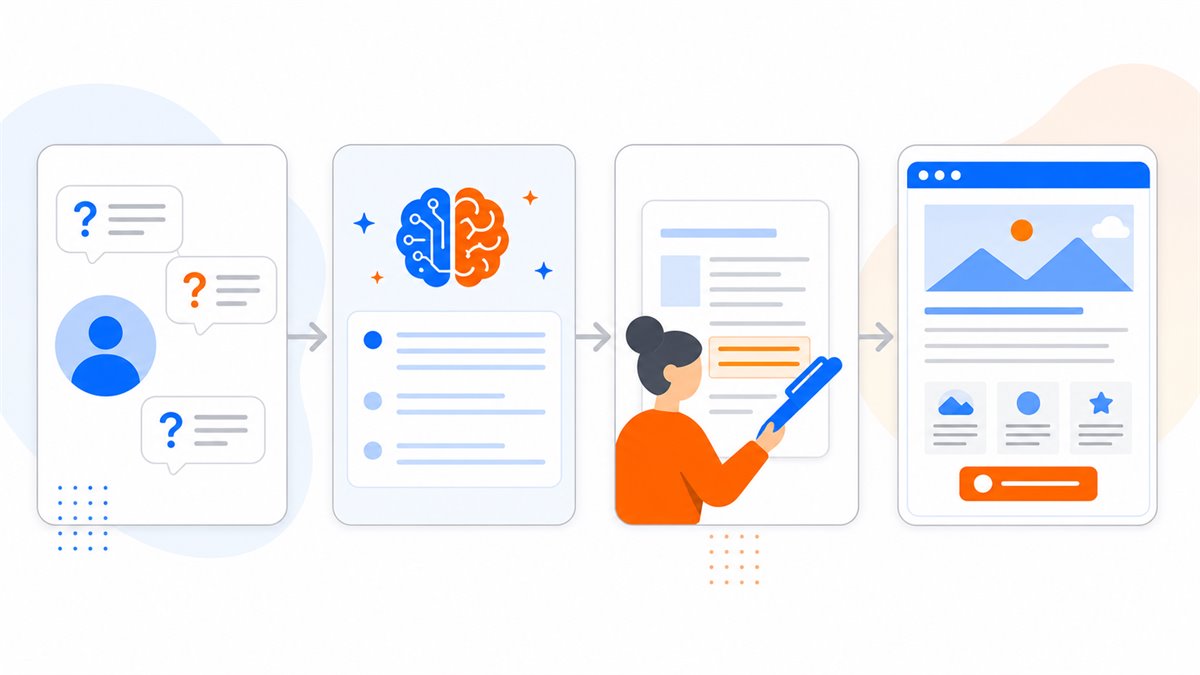
A 6-step workflow for using AI while keeping content useful
To make AI support SEO well, do not start with a prompt like "write an SEO article about spas." Start with real business data and the search intent behind the page. This workflow works for service pages, landing pages, blog posts and product pages.
- Choose one search intent. Examples: "landing page design price", "hair wash spa district 7", "website for restaurants". One page should serve one main intent group.
- Give AI real data. Include prices, area served, customer group, offers, turnaround time, differences, common questions and claims to avoid.
- Ask for an outline first. Check whether the outline answers what the reader needs before asking for a full draft.
- Add examples and proof. Real photos, real process, real numbers, real customer situations. This is the part AI cannot replace.
- Edit for natural reading. Cut empty phrases, remove unnecessary adjectives, shorten long paragraphs and place contact buttons where they make sense.
- Check on-page SEO. Review title, description, H1-H2, image alt text, page speed, mobile layout and internal links.
For the last step, use the on-page SEO checklist as a quick review. Keep it practical: a title that matches intent, one clear H1, an opening that answers quickly, lightweight images, good mobile performance and links to related content.
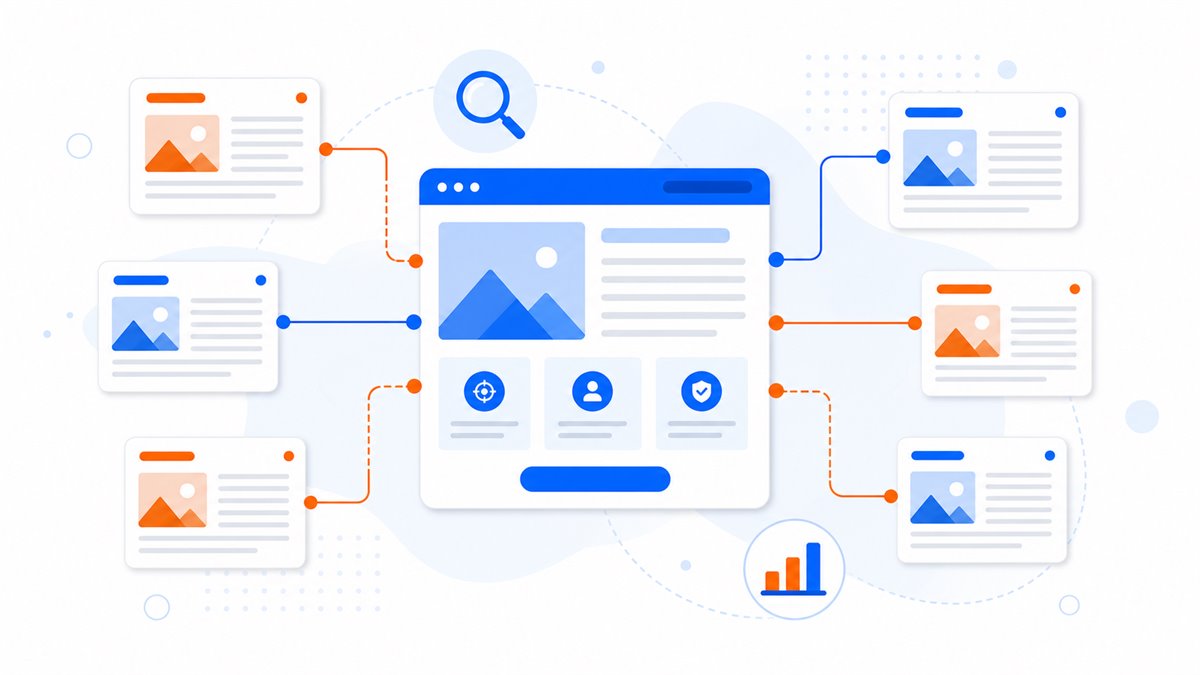
How AI-supported blog content can send traffic to a landing page
A service landing page is often not enough to attract traffic by itself. It is good at converting visitors, but it cannot answer every question people search before buying. Blog content fills that gap: each article answers one specific question, then leads the reader to the service page when they are ready.
For a website design service, a useful content cluster might cover: what a landing page is, website costs, website vs Facebook page, what SEO is, page speed, Zalo/Messenger integration, and DIY vs hiring a pro. These articles do not push for the sale immediately, but they attract people who are researching. When they are ready, links to Web Trong Ngày pricing or the consultation form can turn traffic into leads.
Where should internal links go?
- In educational articles, link to 2-4 related posts so readers can go deeper.
- Where the buying intent is higher, link to the service page, pricing section or contact form.
- Use descriptive anchor text, such as "Web Trong Ngày pricing" instead of "click here."
- Do not overload the page with links. Each link should help the reader take a useful next step.
Optimizing for AI search still starts with SEO fundamentals
Some people call optimization for AI search AEO or GEO and package it like a brand-new playbook. In practice, Google's guide to optimizing for AI features in Search still comes back to familiar foundations: helpful, reliable content, unique insight, solid technical structure and pages that can be crawled.
What has changed is that generic content is harder to notice. If a page only repeats common advice, AI summaries can answer the reader without them opening the site. To earn traffic, a page needs its own value: business experience, industry examples, practical checklists, real pricing, real photos, real process.
- Answer the main question near the top of the page.
- Use H2-H3 headings so readers and search engines understand the structure.
- Add industry examples: restaurants, spas, shops, real estate, courses.
- Update old articles when prices, tools or workflows change.
- Keep pages fast, mobile-friendly and easy for crawlers to follow through internal links.
In short: AI does not replace SEO fundamentals. It only makes the content race faster. Pages with real data, real experience and strong structure still have the advantage.
Checklist before publishing AI-assisted content
Before publishing a page or article supported by AI, run through this short checklist. It reduces factual mistakes and increases the chance that the page serves the right reader.
- The main keyword appears naturally in the title, opening section and one H2.
- The introduction answers the searcher's question quickly.
- Every detail about price, timing, warranty and offers has been checked against a real source.
- The article includes specific examples from an industry or customer situation.
- There are at least two internal links to related articles or a service page.
- Images have alt text, are lightweight and do not contain hard-to-read text.
- The page reads well on mobile: short paragraphs, clear lists, easy-to-tap CTA.
- There are no exaggerated promises such as "guaranteed ranking" without evidence.
If you need a simple conversion page with SEO structure, Zalo/Messenger buttons, lead form and fast mobile performance, browse the industry demo sites or send a request through Web Trong Ngày. Good content can bring visitors in, but the landing page still needs to be fast and trustworthy enough to turn reading into contact.
Frequently asked questions
Is AI-written website content good for SEO?
Yes, if AI is used to support research, outlines, drafts and structure, followed by human review and real business information. Publishing generic AI output without unique value makes the page much harder to compete with.
Does Google penalize AI-written content?
Google does not judge content only by which tool created it. What matters is whether the content is helpful, reliable, accurate and made for readers. Producing many AI pages without adding value can violate spam policies.
Which parts of a landing page should AI write?
AI can help with outlines, subheadings, FAQs, benefit descriptions, CTA variations and meta descriptions. Pricing, guarantees, customer reviews, warranty policy and real results must be checked by a person using real business data.
Should AI content be edited before publishing?
Yes. Check facts, remove empty phrases, add real examples, shorten long paragraphs, add internal links and review on-page SEO. The more carefully an AI draft is edited, the more useful it becomes for readers.
Can blog posts increase traffic to a landing page?
Yes, when each post answers a question customers are searching for and naturally links to the service page, pricing section or contact form. Blog content attracts research-stage visitors; the landing page converts people who are ready to act.
Need a professional website or landing page?
Web Trong Ngày delivers in 24 hours, all-in for $40 — preview the demo first, pay only when you are happy, own it for life.