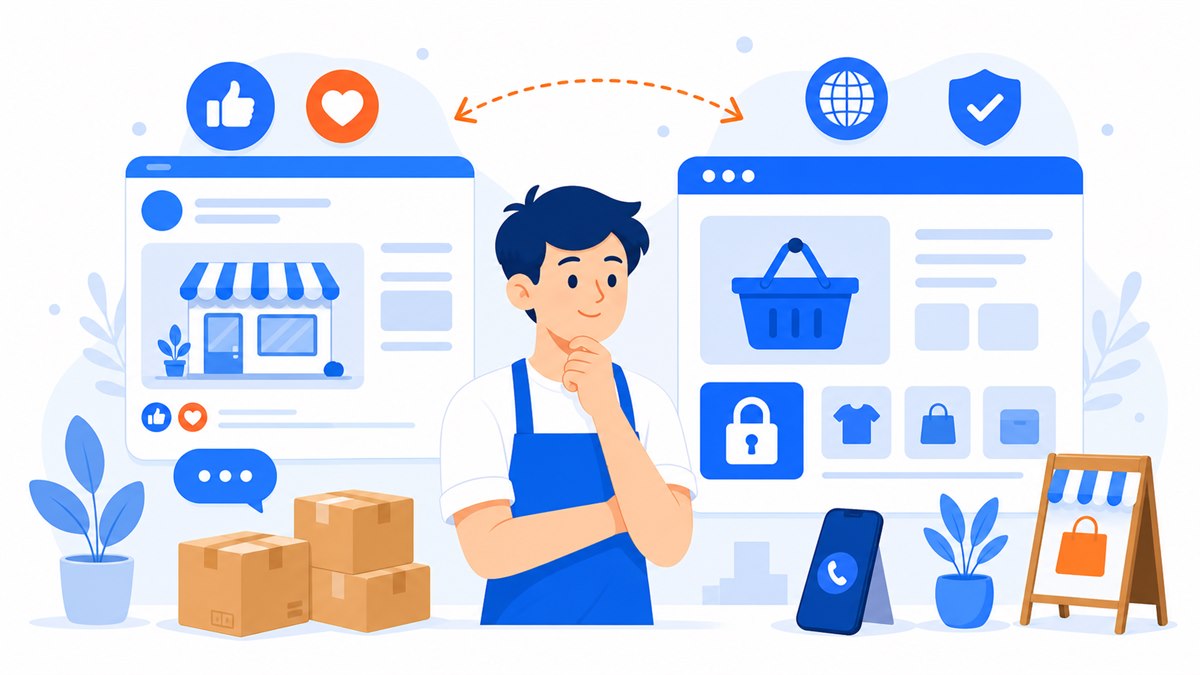
Does a Small Business Actually Need a Website?
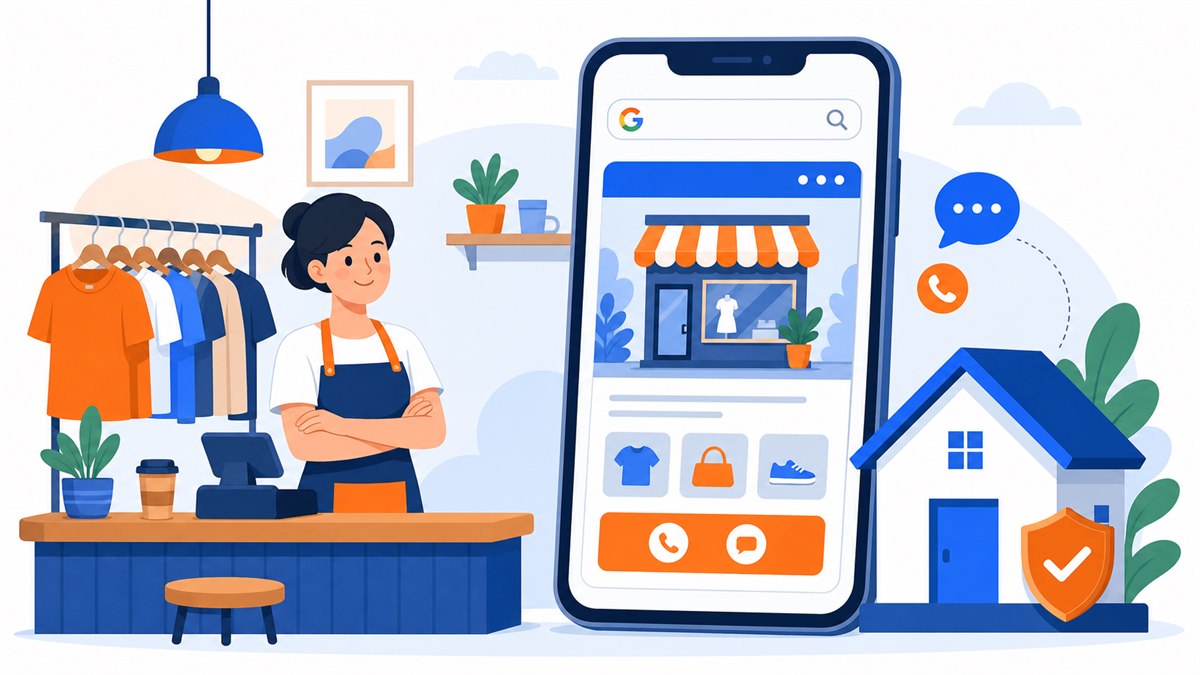
- Whether a small business needs a website comes down to one question: do you want customers to find you on Google and trust you enough to buy? A Facebook page alone usually isn't enough for both.
- A website is an asset in your name — it can't be locked like a Facebook page, and it doesn't disappear if you stop a monthly subscription.
- A lean page with clear pricing, real photos and contact buttons builds credibility and captures leads at any hour.
- Building a website doesn't have to be expensive: a compact all-in package at $40, delivered in 24 hours, with one-time payment and no monthly fees.
- Start small and on target: gather your content first, choose a builder who gives you full ownership, and see a live demo before you pay.
Every week someone asks me this question — usually a shop owner or café owner who already has a Facebook page, runs ads, and gets orders through Messenger just fine. Why spend money on a website?
Short answer: you don't need a website to stay in business, but without one you're losing customers you can't see. Someone searches your café name on Google and nothing comes up, or a result for a different café with the same name shows instead. Someone wants to check your prices at 11 p.m. and has nowhere to look.
Here's when it makes sense to build one, when it doesn't, what it costs, and where to start.
Customers search for you on Google and find nothing
Here's a realistic scenario. A friend recommends your café. The person vaguely remembers the name, opens their phone and searches on Google. If you only have a Facebook page, the result might appear — or it might get buried under other results, or it might surface a page with the same name in a different city. After a few seconds of uncertainty, they give up and head somewhere closer.
Most customers in Vietnam search on their phone before deciding to buy or visit. They type "herbal scalp spa District 7", "birthday cake near me", "affordable men's clothing". If you don't have a page that ranks under your own name, you're essentially invisible at the exact moment someone is ready to spend.
A dedicated website helps you show up properly when customers search your brand name, and over time gives you a real shot at ranking for service-based searches too. A Facebook page alone doesn't do this nearly as well. If you want to understand why having both matters, I wrote a longer piece comparing them: is selling on Facebook enough? Website vs. Facebook page.
A website is an asset you own; a Facebook page is rented space
This is something a lot of shop owners overlook. Your Facebook page doesn't belong to you. You build it, post on it every day, but Facebook sets the rules. They change the algorithm and your reach drops overnight. They mistakenly lock an account and you lose years of posts and your entire customer list. Wrongful account lockouts happen in Vietnam far more often than you'd expect — ask any shop that's been selling online for a few years.
A website is different. When you own the domain and the source code, that's an asset in your name. Nobody can lock it. Customers who visit your site are on your turf, not on a platform that can revoke your access at any time.
Watch out for "monthly rental" web plans
Plenty of drag-and-drop platforms let you build a page quickly and pay month to month — usually around $8 to $36 a month. It sounds affordable, but you're still renting. Stop paying and the page disappears, along with all the links customers already know. I go into more detail in subscription website vs. owning outright if you're weighing the options.
Paying once to own something is completely different from paying forever to use something that will never be yours.
Build credibility and capture leads around the clock
Put yourself in a customer's position. Two spas, same price range: one has only a Facebook page with a handful of photos; the other has its own website with a full service menu, photos of the treatment rooms, reviews from past clients, and a phone number you can tap and call right away. Which one feels more trustworthy? A proper website signals: this business is serious.
More importantly, a website sells for you while you sleep. Someone browsing at midnight sees a dress they like, checks the price and sizing, reads how to order, then leaves their number or messages on Zalo. You open your phone the next morning and there's an order waiting. A Facebook page can do some of this, but customers have to message you and wait for a reply — plenty of people just don't bother.
- Clear pricing and services: customers can check on their own without asking, which saves time for everyone.
- Real photos, real reviews: strangers need proof before they reach out.
- Call, Zalo, Messenger and contact form buttons right on the page: one tap and they're connected to you.
- Runs around the clock: no lunch breaks, no holidays, no forgotten messages.
To turn browsers into buyers, your page needs specific trust signals. I've put together the key ones in 8 trust signals that make customers comfortable buying online — read it and you'll know exactly what to put on your home page.
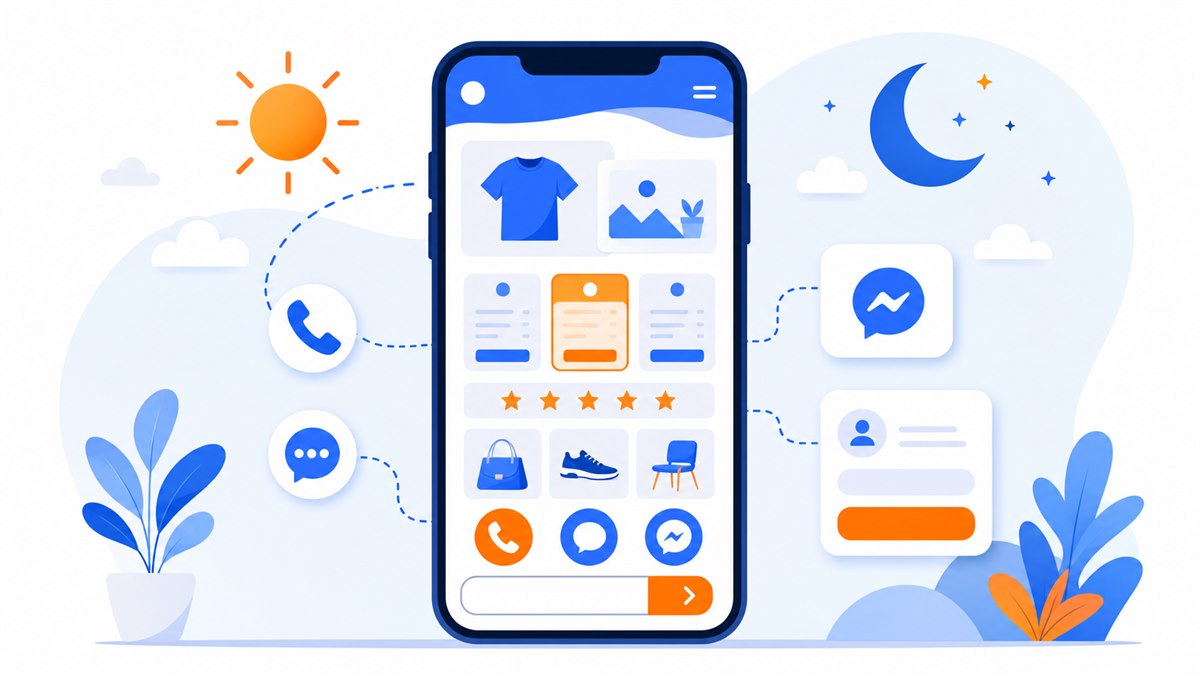
Is building a website actually expensive?
This is the biggest mental block for most shop owners. Many assume a website costs hundreds of dollars and comes with ongoing monthly fees. That's true of some options on the market. A basic intro page or landing page done the traditional way often runs around $80 to $200, with a 3-to-5-day turnaround. Add in a domain at roughly $12 to $32 a year and hosting around $40 a year.
But expensive or affordable depends on what you actually need. A bun bo shop or a small skincare store doesn't need a sprawling site. What you need is a clean, good-looking page with your prices, photos, and contact options — one that ranks on Google and looks right on a phone. That's enough to close orders.
When asking for a quote on a basic intro page, make sure the proposal spells out every item: domain, hosting, SSL, mobile-ready layout, contact form, Zalo, Messenger, Facebook, source-code ownership and what (if anything) you'll owe from year two onward. For a clear picture of what the market charges, see a realistic website pricing breakdown.
Common misconceptions that keep shop owners from building
Most hesitation comes from a few widespread myths. Once you clear these up, the decision gets much easier.
"I already have Facebook — why do I need a website?"
Facebook and a website don't replace each other; they complement each other. Facebook is great for reaching new customers and keeping engagement alive. A website builds credibility, ranks on Google and is an asset you own. The best setup is both: use Facebook to bring people in, use your website to close.
"Setting up a website sounds complicated — I'm not technical"
You don't need to be. Your job is to hand over your photos, pricing and contact details. The technical side is the web team's problem. If you're still torn between building it yourself and hiring someone, build a website yourself or hire a designer walks through both options.
"After it's done, nobody will visit"
An abandoned website does get little traffic, but if you put your web address in your Facebook page bio, your Zalo profile, your business card and your Google Maps listing, customers will visit. A website doesn't pull traffic on its own — it's where customers land and decide. Bringing them there is the work you do every day.
Where should a small business start with a website?
If you've read this far and feel like you belong in the "should build" camp, don't overthink it. Start small, match what you need right now, and expand later.
- Decide whether you need one page or several. A small shop or a simple service usually only needs a single intro page or landing page. If you're not sure what a landing page is, take a quick look at what is a landing page.
- Gather your content before you start. Your logo, a few dozen good photos, your price list, service descriptions, phone number and Zalo. Having these ready makes the build go fast.
- Choose a builder who gives you full ownership. Prioritize anyone who hands over both the source code and a domain registered in your name, with a one-time payment and no ongoing monthly fees.
- Ask to see a working demo before you pay. Don't hand over money until you've seen the actual page. Approve it, then close.
The cleanest starting point is a single page with everything a customer needs. View it on your phone, fix any rough spots, then expand. If you need more later, you can grow into a multi-page business site or an e-commerce site with a cart and order management.
Before choosing a builder, look at demos in your industry, ask exactly who owns the domain, and tap every contact button on your phone yourself. These small checks save you from paying for a page that looks great on a desktop but can't convert real customers.
Frequently asked questions
Does a small business really need a website, or is Facebook enough?
A website matters if you want customers to find you on Google, build trust, and own a real asset under your name. Facebook is good at reaching new people; a website is what makes them trust you and commit. Ideally, use both — let Facebook bring people in, let the website close them.
How much does a website cost for a small shop?
It depends on what you need. A basic intro page or landing page typically runs around $80 to $200, plus a domain and hosting each year. Compare what's included in the scope of work, not just the headline number.
Is it hard to get a website if I'm not technical?
Not at all. All you need to prepare is your photos, pricing and contact details. The tech side is on the web team. A simple page can be handed over in 24 hours, with revisions before you sign off.
Do I have to pay monthly fees after the website is built?
It depends on how you build it. Monthly-subscription platforms usually take the page offline or restrict it if you stop paying. If you pay once to own the site outright, make sure the handover includes the source code, domain and hosting details.
Should I build a one-page landing page or a full multi-page website?
A small shop or simple service usually only needs a single landing page or intro page to close orders. As your products and content grow, you can expand to a multi-page site later — it's never too late to make that move.
Need a professional website or landing page?
Web Trong Ngày delivers in 24 hours, all-in for $40 — preview the demo first, pay only when you are happy, own it for life.